
Oil Surges Above $115 After Saudi Refinery Attack Claim: Why Gold and Silver Are Falling Before the Fed
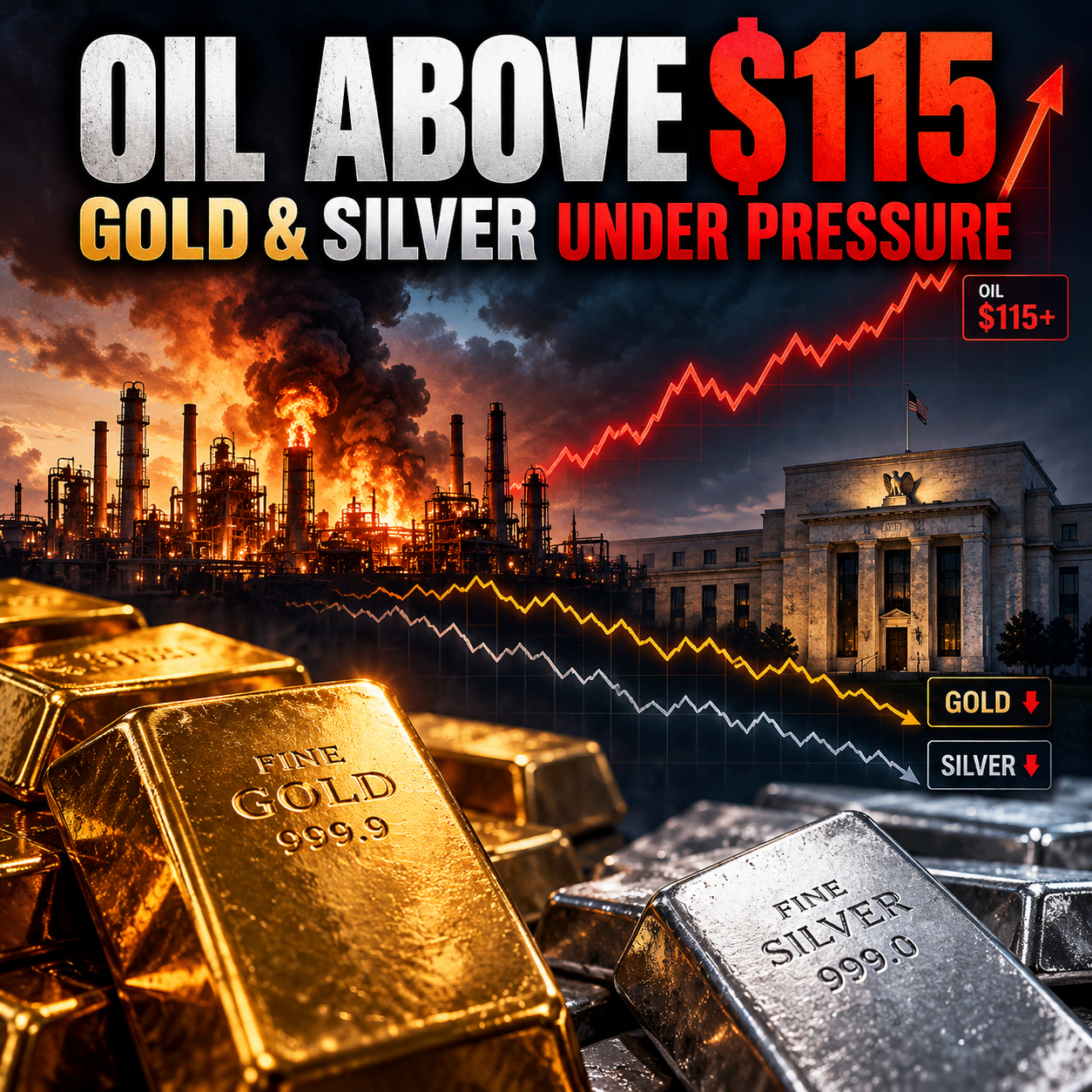
Featured image: AI-generated conceptual illustration, not a photograph of the reported incident.
October 28, 2026 | Limitless Metals Market Report. Oil prices climbed above $115 a barrel Wednesday after Yemen’s Houthi movement claimed it struck Saudi Arabia’s Ras Tanura refinery. At the same time, gold and silver traded lower ahead of the Federal Reserve’s scheduled interest-rate decision. The apparent contradiction—higher geopolitical risk but weaker precious metals—illustrates how inflation fears and interest-rate expectations can overpower safe-haven demand in the short term.
Oil jumps above $115 after claim involving Saudi refinery
Reuters reported that Brent crude futures rose about 1.4% to $115.47 a barrel while U.S. West Texas Intermediate climbed about 1.4% to $101.33 during Wednesday trading. The Houthi movement claimed a missile strike on Ras Tanura, a major Saudi refining complex with capacity of approximately 550,000 barrels a day. Saudi authorities had not immediately confirmed the claimed strike. The extent of any physical damage or production disruption was not independently established at the time of reporting.
The possibility of disruption to Saudi energy infrastructure matters because global oil prices incorporate expectations about future supply as well as current production. Markets can react to a credible threat before any lasting interruption is confirmed.
Gold and silver slip despite geopolitical tension
In a Wednesday Reuters market snapshot, spot gold fell approximately 0.7% to $4,030.20 per troy ounce, while silver declined about 1% to $53.82. These were intraday quotations, not final settlement prices or live prices for the remainder of the day.
Investors have been weighing renewed oil-price pressure against expectations that the Federal Reserve could keep borrowing costs elevated. Gold and silver do not pay interest, so higher yields on competing assets can reduce their relative appeal. A firmer U.S. dollar can also weigh on dollar-priced metals.
Why higher oil prices can hurt gold
Oil and gold are sometimes described as inflation hedges, but their relationship is not straightforward. A rise in crude oil can lift gasoline, transportation and manufacturing costs. If policymakers view the increase as a threat to price stability, markets may anticipate tighter monetary policy for longer.
That can increase Treasury yields and the opportunity cost of holding bullion. Conversely, geopolitical conflict can stimulate defensive demand for gold. The net price effect depends on which influence dominates at a given moment.
Why silver may face additional pressure
Silver has an important industrial role in electronics, electrical equipment, solar technologies and other applications. A prolonged energy shock could weaken manufacturing activity and growth expectations, potentially weighing on industrial silver demand. At the same time, silver can attract investment demand during monetary uncertainty. Those competing forces often contribute to sharper volatility than in gold.
Federal Reserve decision: what investors are watching
The Federal Reserve’s policy announcement is scheduled for 2 p.m. Eastern on October 28, followed by a press conference. Reuters reported that markets broadly expected no change in the current benchmark rate, while futures pricing suggested a substantial probability of an additional increase in December. Those probabilities can shift quickly and are not guarantees.
The Fed’s explanation of inflation risks, future rate decisions and economic growth may matter more to metals prices than the expected decision to hold rates. Investors are also awaiting additional U.S. inflation and growth figures.
Three scenarios for physical precious metals buyers
1. Oil remains elevated and the Fed sounds restrictive
Higher inflation expectations, yields and dollar strength could maintain pressure on gold and silver, even if geopolitical risk remains high.
2. Energy tensions ease and inflation expectations soften
Lower oil prices could reduce concerns about future rate increases, potentially improving conditions for precious metals. Reduced safe-haven demand could offset some of that benefit.
3. Supply disruptions deepen and economic growth weakens
Gold might benefit from defensive demand, while silver could face conflicting pressures from investors and industrial users. Neither outcome is certain.
What to consider before buying gold or silver
Physical metals investors should consider their investment horizon, liquidity needs, exposure to price volatility, and the premiums and spreads associated with coins and bars. Storage, insurance, shipping and IRA custody costs may also apply. A sudden market selloff is not automatically a bargain, and geopolitical developments do not guarantee a price rebound.
Limitless Metals outlook
Today’s oil rally is a reminder that precious metals respond to more than headlines about conflict. Inflation expectations, Treasury yields, currency movements and industrial demand all influence the market. At Limitless Metals, our focus is helping clients understand those risks while exploring physical gold and silver ownership for long-term financial planning.
Frequently asked questions
Why is gold falling when oil is rising?
Higher oil prices can raise inflation expectations and reinforce forecasts for elevated interest rates. That can pressure non-yielding gold, even as geopolitical tensions increase demand for defensive assets.
Does a Saudi refinery attack mean oil production has stopped?
No such conclusion can be drawn from the initial claim. Saudi authorities had not immediately confirmed the Houthi account, and the operational consequences were not independently established in the reports cited here.
Will the Federal Reserve decision affect silver?
Potentially. Interest-rate expectations and dollar movements influence investment demand, while the economic outlook affects silver’s industrial-demand prospects.
Sources: Reuters: Oil rises after Saudi refinery attack claim (Oct. 28); Reuters: Gold slips ahead of Fed meeting (Oct. 28); Kitco: Gold and silver morning report (Oct. 28).
Information is educational, not individualized investment advice. Spot quotations are intraday snapshots and can change. Precious metals can lose value, and physical transactions involve premiums, spreads and other costs.
Stay Informed on Gold, Silver & Retirement Markets
Get market updates, precious-metals education, Gold IRA insights, and retirement-focused articles from Limitless Metals.