
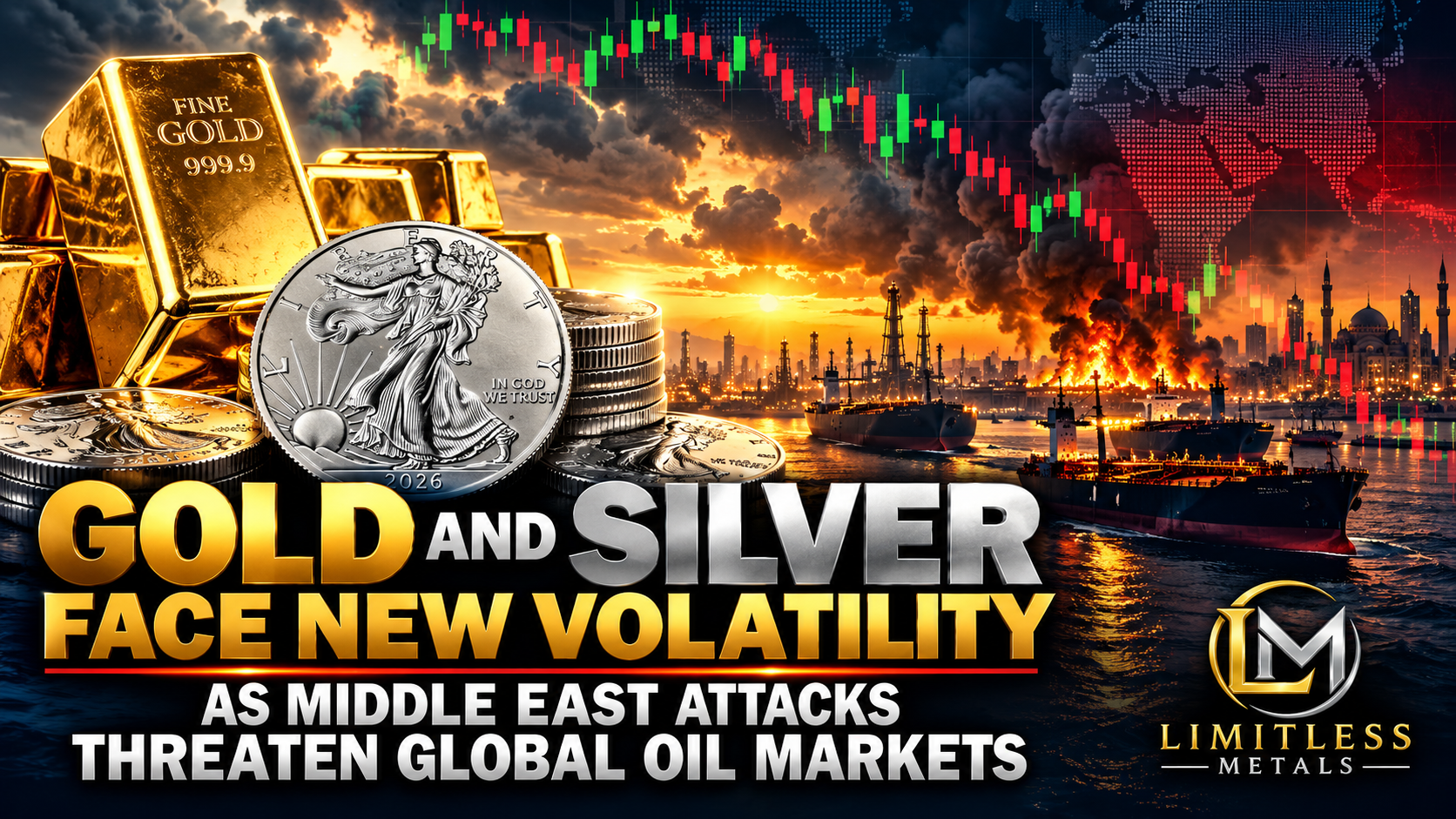
October 11, 2026 | Limitless Metals Market News
Global financial markets are entering a new trading week facing heightened geopolitical uncertainty, renewed oil supply concerns, and mounting questions about the direction of U.S. interest rates.
Following a turbulent period for precious metals, tensions in the Middle East are raising concerns about another wave of volatility. Disruptions to energy infrastructure or commercial shipping could influence oil prices, inflation expectations, and demand for defensive assets.
For gold and silver investors, the question is increasingly important: Will geopolitical instability drive renewed interest in precious metals, or will rising energy prices and inflation concerns support higher interest rates and weigh on bullion?
Middle East Tensions Put Global Energy Markets in Focus
Developments in the Middle East can have implications far beyond the region. Attacks on energy facilities, transportation infrastructure, or commercial vessels may affect the perceived security of international energy shipments and the costs of moving goods.
The Strait of Hormuz is among the world’s most strategically important oil transportation corridors. A significant disruption in the region could affect crude oil prices, freight costs, inflation expectations, and investor sentiment.
The central market concern is not simply geopolitical conflict itself, but the potential consequences for global energy supplies. Reports about individual incidents should be confirmed with current, reliable reporting; the scenarios discussed here are potential market effects, not claims that a specific disruption has occurred.
Higher Oil Prices Could Renew Inflation Concerns
Energy prices influence more than the cost of filling a gas tank. Sustained increases in crude oil can feed into transportation expenses, manufacturing costs, and the price of delivering goods throughout the economy.
If oil prices rise and remain elevated, central banks may find it harder to bring inflation toward their targets. That possibility can create a complicated environment for gold and silver.
On one hand, geopolitical instability and concerns about purchasing power can encourage investors to consider gold as a potential diversifier. On the other, persistent inflation may lead investors to anticipate tighter monetary policy, higher Treasury yields, or a stronger U.S. dollar.
Those forces can weigh on precious metals, which do not generate interest income. Gold does not automatically rise when oil prices rise. The direction of yields, the dollar, and market expectations all matter.
Gold Enters the Week Facing Competing Forces
Gold’s performance is shaped by several interacting drivers: expectations for real interest rates, currency movements, investment demand, central-bank purchases, and geopolitical uncertainty.
When Treasury yields decline or the dollar weakens, gold can become relatively more attractive. During periods of intense uncertainty, some investors also turn to physical gold and gold-related investments in search of diversification.
But when inflation fears drive yields higher, gold may come under pressure even while geopolitical risks remain elevated. Investors should therefore avoid treating a single headline as a reliable forecast of the next price move.
Gold’s next major move may depend on whether demand for defensive assets outweighs the impact of interest-rate expectations. Any reported price levels should be checked against live market data before being used to make a trading decision.
Silver Faces a Different Set of Pressures
Silver is both an investment metal and an industrial input. It is used in electronics, electrical equipment, solar technologies, and manufacturing, among other applications.
That dual role can make silver’s response to geopolitical shocks less straightforward than gold’s. Investors may seek silver exposure during periods of monetary uncertainty, while industrial demand may be affected by slower economic activity, higher production costs, or changes in manufacturing expectations.
Silver can experience larger percentage price swings than gold, particularly when liquidity conditions or market sentiment shift rapidly. A rally in gold does not guarantee that silver will rise by the same percentage—or even move in the same direction over shorter periods.
For investors comparing the two metals, understanding this distinction is important when evaluating portfolio concentration and risk tolerance.
The Federal Reserve Could Determine the Next Major Move
Federal Reserve policy remains central to the precious-metals outlook. Investors are weighing the balance between inflation pressures and economic growth as they assess the likely path of interest rates.
Higher interest rates can increase the appeal of interest-bearing assets relative to physical gold and silver. A stronger dollar can also raise the cost of dollar-denominated precious metals for buyers using other currencies.
Conversely, lower yields, a softer dollar, or stronger demand for defensive assets can provide support for precious metals. The effect of a new economic report depends not only on the headline number but also on how it changes expectations relative to what markets had already priced in.
That is why inflation releases, central-bank commentary, and Treasury-market movements deserve close attention alongside geopolitical developments.
Five Developments Gold and Silver Investors Should Watch This Week
- Middle East developments: Verified reports affecting shipping lanes, energy facilities, or regional security could alter perceptions of supply risk.
- Crude oil prices: Sustained increases could reinforce inflation concerns and influence monetary-policy expectations.
- Treasury yields and the U.S. dollar: Both are important short-term influences on gold and silver pricing.
- U.S. economic data and Federal Reserve commentary: New information may reshape expectations for the future path of rates.
- Gold and silver price action: Watch whether price moves are sustained, and whether gold and silver confirm or diverge from one another.
Price levels and chart patterns can help investors understand market behavior, but they are not guarantees of future performance.
Why Physical Precious Metals Remain Part of the Conversation
Periods of geopolitical instability often encourage investors to reassess portfolio concentration, liquidity needs, and exposure to financial-market risks.
Physical gold and silver are tangible assets that provide a different type of exposure from stocks and bonds. However, they are not immune to volatility: market prices can decline, sometimes sharply, and physical purchases may involve premiums, spreads, shipping, insurance, and storage expenses.
For retirement investors, certain qualifying precious metals may be held through appropriately structured self-directed individual retirement accounts, subject to IRS requirements and approved custodial arrangements. Not every coin or bar is eligible, and IRA-held metals generally must be stored according to applicable custodial rules.
At Limitless Metals, we believe understanding both the opportunities and the risks is essential when evaluating physical precious metals as part of a broader financial strategy.
Final Outlook: A Potentially Volatile Week Ahead
The combination of Middle East tensions, energy-market uncertainty, inflation concerns, and changing interest-rate expectations creates an environment in which market sentiment can shift quickly.
Gold may benefit from periods of defensive demand, but higher yields or a stronger dollar can work against that trend. Silver may respond to many of the same monetary forces while also reflecting changing expectations for industrial demand.
The key question heading into the week is whether geopolitical uncertainty will outweigh the pressure created by inflation and interest rates. No single outcome is assured, and investors should monitor verified developments and live pricing as the week unfolds.
Explore Physical Precious Metals With Limitless Metals
Limitless Metals offers educational resources about physical gold and silver, direct delivery, and precious metals IRA services. Explore our gold and silver products or learn about precious metals IRAs.
Visit LimitlessMetals.com or call 855-744-3068.
Sources and Further Reading
- U.S. Energy Information Administration — Short-Term Energy Outlook (energy-market context)
- U.S. Energy Information Administration — World Oil Transit Chokepoints (shipping and supply context)
- Federal Reserve — Monetary Policy (interest-rate framework)
- World Gold Council — Goldhub (gold-market research)
Disclaimer: This article is for informational and educational purposes only and does not constitute investment, legal, or tax advice. Precious metals prices fluctuate and investments involve risk. Past performance does not guarantee future results. Consult qualified financial and tax professionals regarding your circumstances.
Stay Informed on Gold, Silver & Retirement Markets
Get market updates, precious-metals education, Gold IRA insights, and retirement-focused articles from Limitless Metals.