
September 5, 2026 | Limitless Metals
The outlook for gold just experienced another important shift.
After a stronger-than-expected U.S. employment report increased expectations that the Federal Reserve could raise interest rates again this month, Citigroup has made a significant change to its interest-rate forecast.
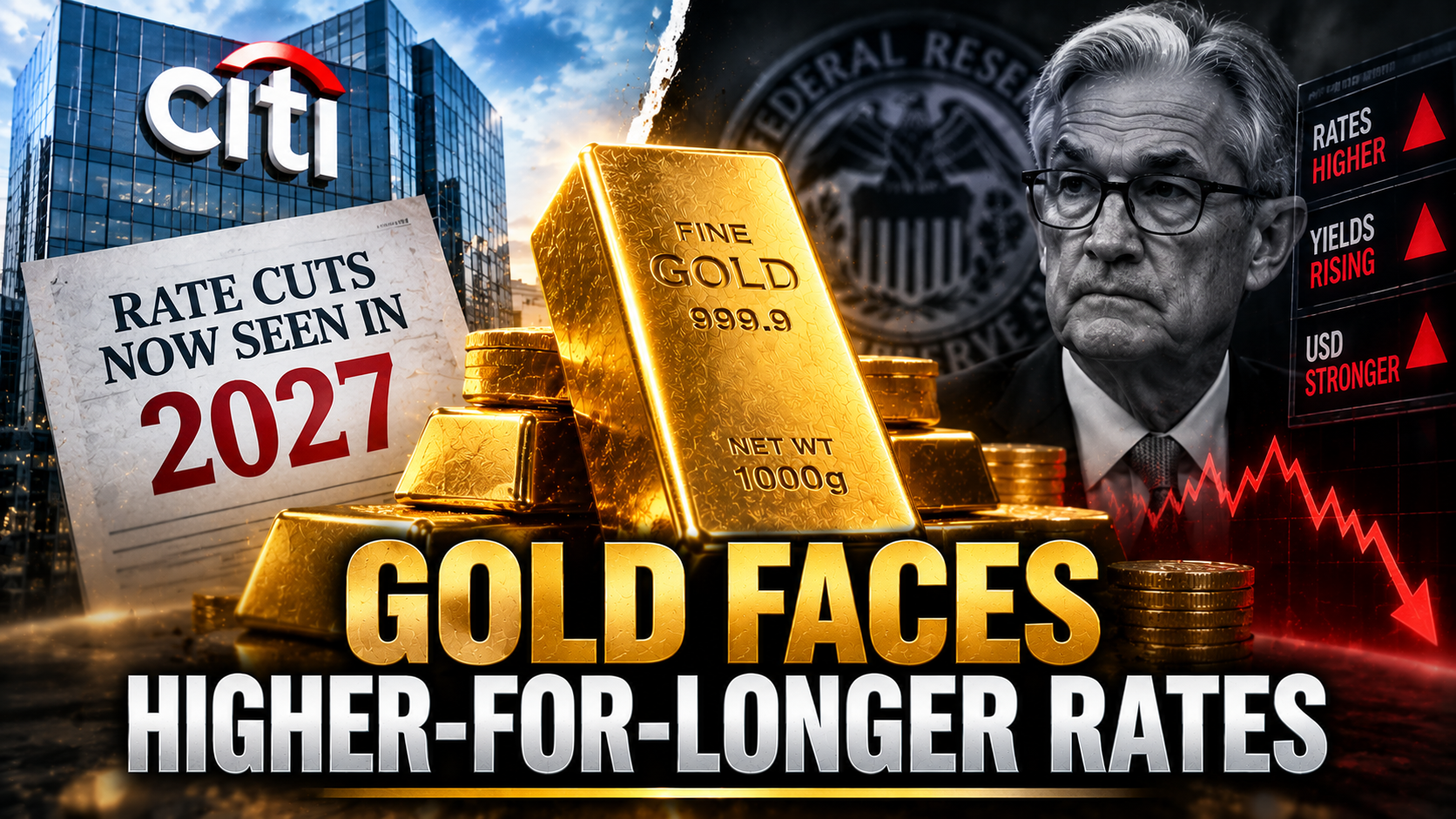
Citi now expects the Federal Reserve’s next interest-rate cut to come in June 2027.
Previously, the bank expected the Fed to begin cutting rates in October 2026, followed by additional reductions in December 2026 and January 2027.
That’s a major change.
For gold investors, it raises an important possibility:
Interest rates could remain higher for considerably longer than markets previously expected.
And that could become one of gold’s biggest challenges during the remainder of 2026.
Citi Pushes Its Next Fed Rate-Cut Forecast Into 2027
Citigroup changed its Federal Reserve outlook following Friday’s surprisingly strong U.S. employment report.
The U.S. economy added approximately 162,000 jobs in August, significantly exceeding expectations, while unemployment remained at 4.1%.
The strength of the labor market reduced the urgency for the Federal Reserve to begin easing monetary policy.
Citi now forecasts three 25-basis-point interest-rate cuts during 2027:
June 2027
September 2027
December 2027
The change effectively removes the rate cuts Citi had previously expected during the remainder of 2026.
That’s particularly important because Citi had been among the more dovish major Wall Street institutions regarding Federal Reserve policy.
September Rate-Hike Odds Jump
The jobs report didn’t just change Citi’s forecast.
Financial markets changed their expectations as well.
Before Friday’s employment report, interest-rate futures implied approximately a 52% probability that the Federal Reserve would raise rates at its September 15–16 meeting.
After the report, that probability increased to approximately:
61%.
Some intraday estimates moved even higher, into the mid-60% range.
The shift shows how quickly monetary-policy expectations have changed.
Only days earlier, investors were debating when the Federal Reserve might begin easing again.
Now markets are seriously considering whether the Fed could raise rates again in September.
Why Higher-for-Longer Rates Matter for Gold
Gold doesn’t generate interest.
That makes interest rates particularly important.
When Treasury securities offer increasingly attractive yields, investors can earn income from government debt rather than holding a non-yielding asset such as physical gold.
Higher real yields — Treasury yields adjusted for inflation expectations — can create an especially significant headwind.
If markets now expect monetary policy to remain restrictive well into 2027, gold could face a longer period of elevated opportunity costs than investors previously anticipated.
That doesn’t automatically mean gold prices must decline.
But it removes one potential catalyst investors had been anticipating:
Federal Reserve rate cuts.
Gold Falls After the Jobs Report
Gold reacted immediately to Friday’s economic data.
Spot gold fell approximately 1.2% to $4,419.09 per ounce Friday afternoon.
During the session, gold dropped more than 2% and reached an intraday low of approximately:
$4,364.99 per ounce.
The U.S. dollar also strengthened following the employment report.
That created two simultaneous headwinds for gold:
Higher interest-rate expectations
and
A stronger U.S. dollar.
Because gold is globally priced in dollars, a stronger dollar can make bullion more expensive for international buyers using other currencies.
Gold’s Short-Term Outlook Has Weakened
Taken together, these developments represent a meaningful change in the near-term gold outlook.
The market now faces:
• Higher odds of a September Federal Reserve rate increase
• Expectations for interest rates to remain elevated longer
• Potentially persistent real-yield pressure
• Renewed U.S. dollar strength
• Continued uncertainty surrounding inflation
Those are legitimate headwinds for gold.
But they don’t tell the entire story.
Investment Demand Is Still Providing Support
Despite the difficult monetary-policy environment, gold investment demand hasn’t disappeared.
According to the World Gold Council, global gold-backed ETFs recorded approximately $3 billion in net inflows during July 2026.
That reversed two consecutive months of outflows.
Global ETF gold holdings increased approximately:
23 tonnes
to approximately:
4,068 tonnes.
Assets under management reached approximately $530 billion.
Year-to-date global gold ETF inflows through July totaled approximately $11 billion, equivalent to an increase of roughly 39 tonnes in holdings.
European funds led July’s rebound with approximately $2 billion of inflows.
Asian-listed funds remained the largest contributor to global year-to-date inflows.
North America, however, remained in net outflow territory for the year.
This tells us something important.
Investors haven’t abandoned gold.
Some investors have actually used lower prices as an opportunity to rebuild exposure.
Central Banks Remain Part of the Long-Term Gold Story
Central-bank demand also remains an important structural component of the gold market.
Unlike short-term traders, central banks generally purchase gold for reserve diversification, liquidity and risk-management purposes.
That demand isn’t necessarily driven by expectations for where gold will trade next week or next month.
Reserve diversification, geopolitical uncertainty and concerns about the international monetary system can influence central-bank decisions over much longer periods.
That provides gold with a source of structural demand that is largely independent of short-term Federal Reserve trading.
Citi Still Sees $5,000 Gold
There’s another interesting part of Citi’s outlook.
Although Citi has become substantially more hawkish about Federal Reserve policy, its broader mid-year commodity outlook still sees gold reaching approximately:
$5,000 per ounce in 2027.
Citi has acknowledged that gold faces near-term headwinds but believes longer-term demand for diversification and macroeconomic hedges can continue supporting the metal.
That distinction matters.
Citi’s new Fed forecast is bearish for gold’s near-term monetary environment.
But it doesn’t necessarily mean the bank has abandoned its longer-term bullish gold thesis.
Instead, the path could become more difficult and volatile.
Geopolitical Risk Remains a Wild Card
Gold investors also can’t ignore geopolitics.
Tensions surrounding the Middle East and the Strait of Hormuz continue creating uncertainty across global energy and financial markets.
Geopolitical instability can increase demand for traditional safe-haven assets.
But the current environment creates a complicated relationship for gold.
If geopolitical tensions push oil prices significantly higher, they can increase inflation.
Higher inflation could encourage the Federal Reserve to maintain restrictive monetary policy.
That means geopolitical instability could simultaneously:
Increase safe-haven interest in gold
while also
Increasing inflation and interest-rate pressure on gold.
This unusual dynamic has contributed to the volatility seen throughout 2026.
Inflation Is Now the Next Major Test
The next major catalyst for gold will be U.S. inflation data.
Both Consumer Price Index and Producer Price Index reports are scheduled ahead of the Federal Reserve’s September meeting.
Those reports could materially alter rate expectations again.
If Inflation Comes In Hot
A strong inflation report combined with Friday’s strong employment data could significantly strengthen the case for another Federal Reserve rate increase.
That could push Treasury yields and the dollar higher and create additional pressure on gold.
If Inflation Comes In Soft
A surprisingly weak inflation report could reduce the need for additional tightening.
September rate-hike probabilities could fall.
Treasury yields could retreat.
And gold could regain some of the ground lost after the employment report.
That’s why the next inflation reports may be among the most important economic releases for gold this month.
What Gold Investors Should Watch
The gold market is now being pulled by several major forces.
Investors should pay particular attention to:
• September CPI inflation
• Producer-price inflation
• September 15–16 Federal Reserve meeting
• Real Treasury yields
• U.S. Dollar Index
• Gold ETF investment flows
• Central-bank gold purchases
• Middle East developments
• Oil prices
• U.S. fiscal and government-debt conditions
These factors could determine whether gold’s recent weakness becomes a larger correction or another consolidation period within the longer-term trend.
Gold Outlook 2026: Near-Term Caution, Long-Term Story Still Alive
The latest developments weaken the short-term gold outlook.
Citi pushing its expected first Federal Reserve rate cut from October 2026 to June 2027 is significant.
The possibility that restrictive monetary policy could remain in place well into next year increases the potential for sustained pressure from interest rates and real yields.
But investors should avoid interpreting that as proof that gold’s broader investment case has disappeared.
Gold ETF demand has begun recovering.
Central banks remain important participants in the physical market.
Geopolitical uncertainty remains elevated.
Fiscal and government-debt concerns continue.
And even Citi’s broader commodity outlook still sees the possibility of approximately $5,000 gold in 2027.
The picture is therefore becoming increasingly divided.
Short term: monetary conditions have become less favorable for gold.
Long term: structural demand and diversification themes remain intact.
The next major battle will be inflation.
If inflation remains stubborn, higher-for-longer interest rates could continue weighing on gold.
If inflation cools unexpectedly, rate expectations — and gold prices — could reverse quickly.
For investors, September may prove to be one of the most consequential months of the 2026 gold market.
Learn More About Physical Gold
At Limitless Metals, we help investors understand physical gold and silver ownership, including direct-delivery precious metals and eligible self-directed precious metals IRA options.
Investors interested in diversifying beyond traditional stocks and bonds can speak with our team to learn more about how physical precious metals work and the options available.
Limitless Metals
Physical Precious Metals • Gold & Silver IRAs • Direct Delivery
(323) 614-0468
Sources
Reuters — September 4, 2026
Citigroup Delays Fed Rate-Cut Forecast to 2027 After Strong U.S. Jobs Report
Citi moved its expected next Federal Reserve rate cut from October 2026 to June 2027 after August payroll growth exceeded expectations.
Reuters — September 4, 2026
Gold Slides After Robust U.S. Payrolls Boost Rate-Hike Bets
Reuters reported spot gold falling approximately 1.2% to $4,419.09, after briefly dropping more than 2% following the employment report.
World Gold Council — Gold ETF Flows: July 2026
Global gold ETFs attracted approximately $3 billion during July, increasing collective holdings by 23 tonnes to approximately 4,068 tonnes.
Citigroup — Midyear 2026 Outlook
Citi’s broader commodities outlook continues to identify diversification and macroeconomic hedging as structural supports for gold and sees gold reaching approximately $5,000 in 2027.
Important Disclosure
This article is provided by Limitless Metals for educational and informational purposes only and should not be considered individualized investment, tax or legal advice. Precious-metals prices fluctuate and may decline. Economic forecasts, institutional price targets and interest-rate expectations can change rapidly and are not guarantees of future performance.