
September 4, 2026 | Limitless Metals
Gold investors just received another reminder of how quickly the 2026 market can change.
Only a day after gold surged more than 2% as investors reduced expectations for another Federal Reserve interest-rate increase, a surprisingly strong U.S. employment report sent the market moving in the opposite direction.
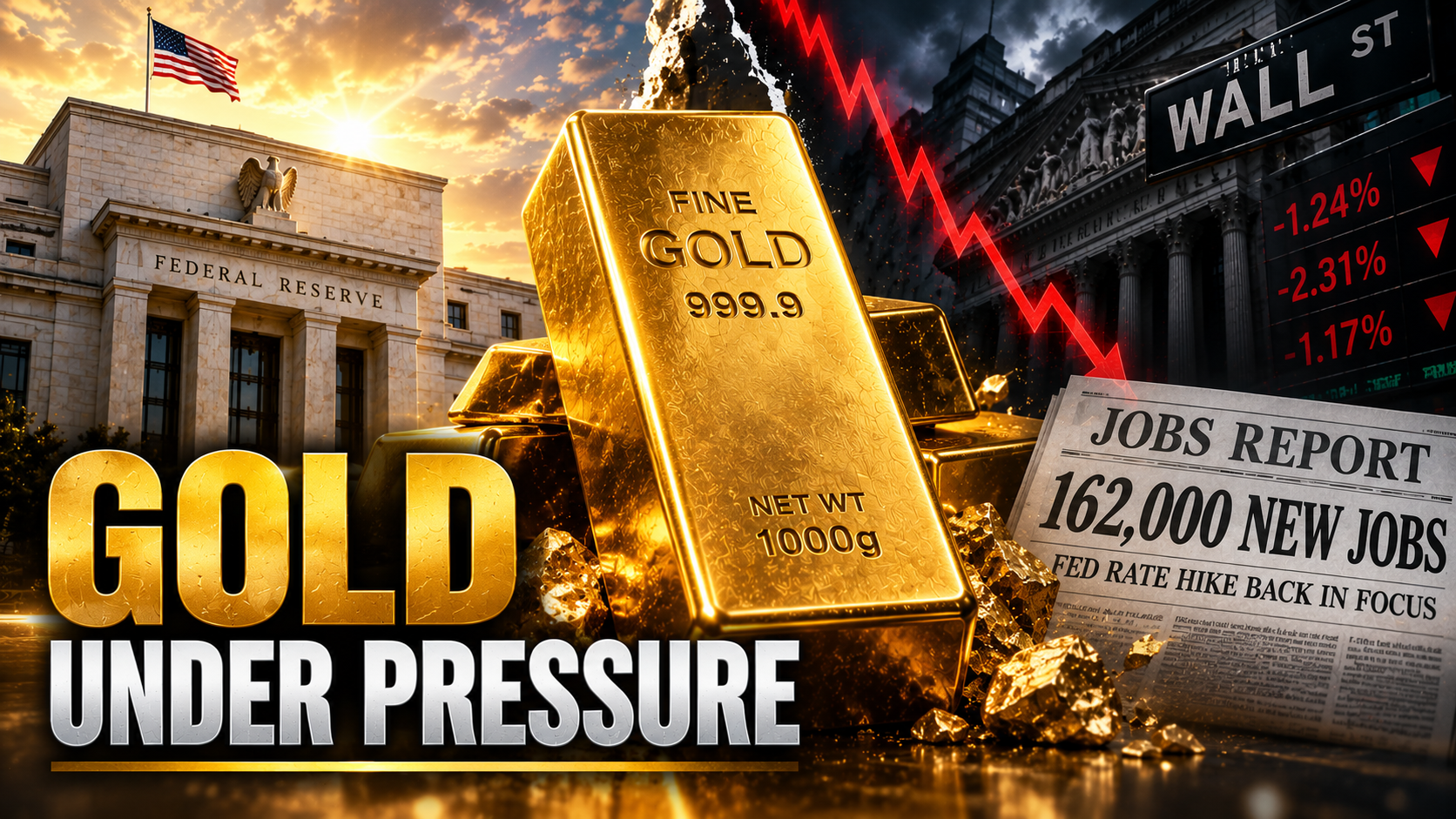
Gold fell Friday as Treasury yields and the U.S. dollar climbed and traders increased bets that the Federal Reserve could raise interest rates at its September meeting.
The sudden reversal highlights what may be the single most important force driving gold right now:
Federal Reserve policy.
And with critical inflation data still ahead, the battle between higher rates and gold’s longer-term fundamental support is far from over.
Gold Drops After a Surprisingly Strong Jobs Report
The August U.S. employment report came in substantially stronger than economists expected.
Nonfarm payrolls increased by approximately 162,000 jobs in August, while the unemployment rate remained at 4.1%.
The stronger labor-market data immediately changed expectations surrounding the Federal Reserve.
Following the report, spot gold declined approximately 1.1% to $4,422.91 per ounce, after falling as low as approximately $4,364.99 during the session.
U.S. gold futures also declined.
The reason wasn’t necessarily that investors suddenly became bearish on gold itself.
The employment report changed expectations about interest rates.
September Fed Rate-Hike Odds Jump Back to 65%
Going into Friday’s employment report, financial markets were assigning approximately a 55% probability to a Federal Reserve rate increase at the September meeting.
After the employment numbers were released, those odds climbed to approximately:
65%.
That’s an important reversal.
Just one day earlier, Federal Reserve Governor Christopher Waller had indicated he would support leaving rates unchanged if inflation continued moderating.
His comments helped push Treasury yields lower, weakened the dollar and sent gold soaring approximately 2.3% Thursday.
Friday’s employment report changed the conversation again.
A resilient labor market gives the Federal Reserve more flexibility to concentrate on inflation.
And inflation remains above the Fed’s long-term 2% target.
Treasury Yields Are Rising Again
Bond markets reacted quickly.
The benchmark 10-year U.S. Treasury yield moved back toward approximately 4.77% following the employment report.
This matters enormously for gold.
Gold doesn’t generate interest.
When investors can earn increasingly attractive yields from U.S. government securities, the opportunity cost associated with owning non-yielding bullion increases.
That doesn’t mean gold automatically declines whenever Treasury yields rise.
But when yields rise sharply — particularly when real yields increase — gold can face significant short-term pressure.
This relationship has been one of the defining forces affecting precious metals throughout 2026.
The Dollar Is Another Headwind
The U.S. dollar also strengthened following the employment report.
Because gold is globally priced in dollars, a stronger dollar can make bullion more expensive for international buyers using other currencies.
Gold therefore encountered two major headwinds simultaneously Friday:
Higher Treasury yields
and
A stronger U.S. dollar.
That combination helped reverse a significant portion of Thursday’s rally.
From $4,489 to $4,423: Gold’s Two-Day Whiplash
Thursday demonstrated what can happen when markets believe the Federal Reserve may become less aggressive.
Friday demonstrated the opposite.
On Thursday, spot gold climbed approximately 2.3% to $4,488.54 per ounce after Waller’s comments reduced rate-hike expectations.
By Friday, gold had retreated to approximately $4,423 following the strong employment report.
These moves aren’t contradictory.
They’re evidence of how sensitive gold has become to changing expectations surrounding interest rates.
Until the Federal Reserve’s September 15–16 meeting becomes clearer, volatility could remain elevated.
Inflation Is Now the Next Major Test
The employment report answered one question.
The American labor market remains relatively resilient.
But another major question remains:
What is happening with inflation?
Investors will receive important producer and consumer inflation reports next week.
Those numbers could become the final major pieces of economic evidence the Federal Reserve receives before its September policy decision.
If inflation remains stubbornly elevated, the combination of strong employment and persistent inflation could strengthen the argument for another interest-rate increase.
That would likely keep Treasury yields elevated and could create additional pressure on gold.
But if inflation begins cooling meaningfully, the Federal Reserve could still decide to remain patient.
That could potentially reverse some of Friday’s increase in rate expectations.
The Long-Term Gold Story Hasn’t Disappeared
Short-term price movements are important.
But investors should separate them from gold’s broader structural story.
Several longer-term forces continue supporting interest in gold.
Central-Bank Demand
Central banks have become a major source of global gold demand.
Reserve managers continue using gold as a diversification asset that doesn’t depend on the creditworthiness of another government or institution.
That demand is structurally different from short-term speculative trading.
Gold ETF Demand Has Rebounded
Investment flows have also improved.
According to the World Gold Council, global gold-backed ETFs attracted approximately $3 billion of net inflows during July 2026, reversing two consecutive months of outflows.
Global ETF gold holdings increased approximately 23 tonnes to 4,068 tonnes.
Year-to-date global gold ETF inflows reached approximately $11 billion, representing an increase of about 39 tonnes in holdings through July.
Europe led July’s inflows, while Asian-listed funds remained the largest contributor to year-to-date global inflows.
North American funds, however, remained in net outflow territory.
That regional divergence is worth watching.
Geopolitical Risk Hasn’t Gone Away
Gold’s monetary environment isn’t the only story.
Geopolitical uncertainty remains elevated.
Ongoing tensions involving the United States and Iran continue influencing energy markets and global inflation expectations.
This creates an unusual situation for gold.
Geopolitical instability can increase safe-haven demand.
But if that instability causes energy prices and inflation to rise sharply, it can also encourage central banks to maintain higher interest rates.
In other words, geopolitical risk can simultaneously support gold while indirectly creating one of gold’s biggest headwinds:
higher interest rates.
That tension may remain important through the remainder of 2026.
The 2026 Gold Market Is Becoming a Battle Between Two Powerful Forces
Gold currently sits between two competing macroeconomic stories.
The Bearish Pressure
Higher interest rates.
Elevated real yields.
A stronger U.S. dollar.
Persistent inflation.
A resilient labor market.
Potential additional Federal Reserve tightening.
These forces can pressure gold.
The Bullish Foundation
Central-bank accumulation.
Gold ETF investment demand.
Government debt and fiscal concerns.
Geopolitical uncertainty.
Reserve diversification.
Potential future monetary-policy easing.
These forces continue supporting the longer-term investment case.
The result could be continued volatility.
What Gold Investors Should Watch Next
The next several weeks could be extremely important.
Investors should pay particular attention to:
• U.S. Consumer Price Index inflation data
• Producer-price inflation
• Federal Reserve commentary
• September 15–16 Federal Reserve meeting
• Real Treasury yields
• U.S. Dollar Index
• Central-bank gold purchases
• Gold ETF investment flows
• Oil prices and Middle East developments
• U.S. fiscal and government-debt conditions
The direction of these indicators may determine whether gold can resume its upward trend or experiences another period of consolidation.
Gold Outlook 2026: Short-Term Pressure, Long-Term Support
Friday’s employment report weakens gold’s immediate outlook.
A stronger-than-expected labor market increases the possibility of another Federal Reserve rate increase.
Higher yields and a stronger dollar could continue creating pressure if those expectations persist.
But that doesn’t erase gold’s longer-term structural drivers.
Central-bank demand remains significant.
ETF investment demand has recovered.
Geopolitical uncertainty remains elevated.
And concerns surrounding government debt, inflation and global reserve diversification haven’t disappeared.
For investors, the key distinction is between short-term monetary pressure and long-term structural demand.
Right now, those forces are pulling gold in opposite directions.
The next major test will be inflation.
If inflation comes in hot, another Fed rate increase could become increasingly likely.
If inflation cools, Friday’s jump in rate-hike expectations could reverse just as quickly as Thursday’s rally did.
For gold, September is shaping up to be one of the most important months of 2026.
Learn More About Physical Gold
At Limitless Metals, we help investors understand physical gold and silver ownership, including direct delivery and eligible self-directed precious metals IRA options.
Investors interested in diversifying beyond traditional stocks and bonds can speak with our team about how physical precious metals work and the options available.
Limitless Metals
Physical Precious Metals • Gold & Silver IRAs • Direct Delivery
(323) 614-0468
Sources
Reuters — September 4, 2026: Fed rate hike back in focus after strong jobs report
This is the primary source for the biggest development today: August payrolls increased 162,000 versus 56,000 expected, unemployment remained 4.1%, and markets increased expectations for a September Fed hike.
Reuters — Fed Rate Hike Back in Focus
Reuters — September 4, 2026: Yields rise after U.S. jobs report
Useful for the market reaction. Reuters reported the 10-year Treasury yield around 4.77% and the dollar strengthening after the employment data, both important short-term headwinds for gold.
Reuters — Yields Rise After Jobs Report
World Gold Council — Gold Demand Trends Q2 2026
This supports the longer-term gold-demand discussion. The WGC reported 289 tonnes of Q2 central-bank purchases, up 62% year over year. It expects investment to be the primary source of demand growth through the rest of 2026 and expects central banks to remain significant buyers.
World Gold Council — Gold Demand Trends Q2 2026
World Gold Council — Central Bank Gold Buying
This is the strongest primary source specifically for central banks. Q2 net purchases reached 289 tonnes, versus a revised 57 tonnes in Q1. First-half central-bank demand totaled 345 tonnes.
World Gold Council — Central Banks
One other useful fact for the article: 45% of central banks surveyed by the World Gold Council said they intend to increase their own gold reserves over the next 12 months.
Important Disclosure: This article is provided by Limitless Metals for educational and informational purposes only and should not be considered individualized investment, legal or tax advice. Precious-metals prices fluctuate and can decline. Institutional forecasts and economic expectations can change rapidly and are not guarantees of future performance.