
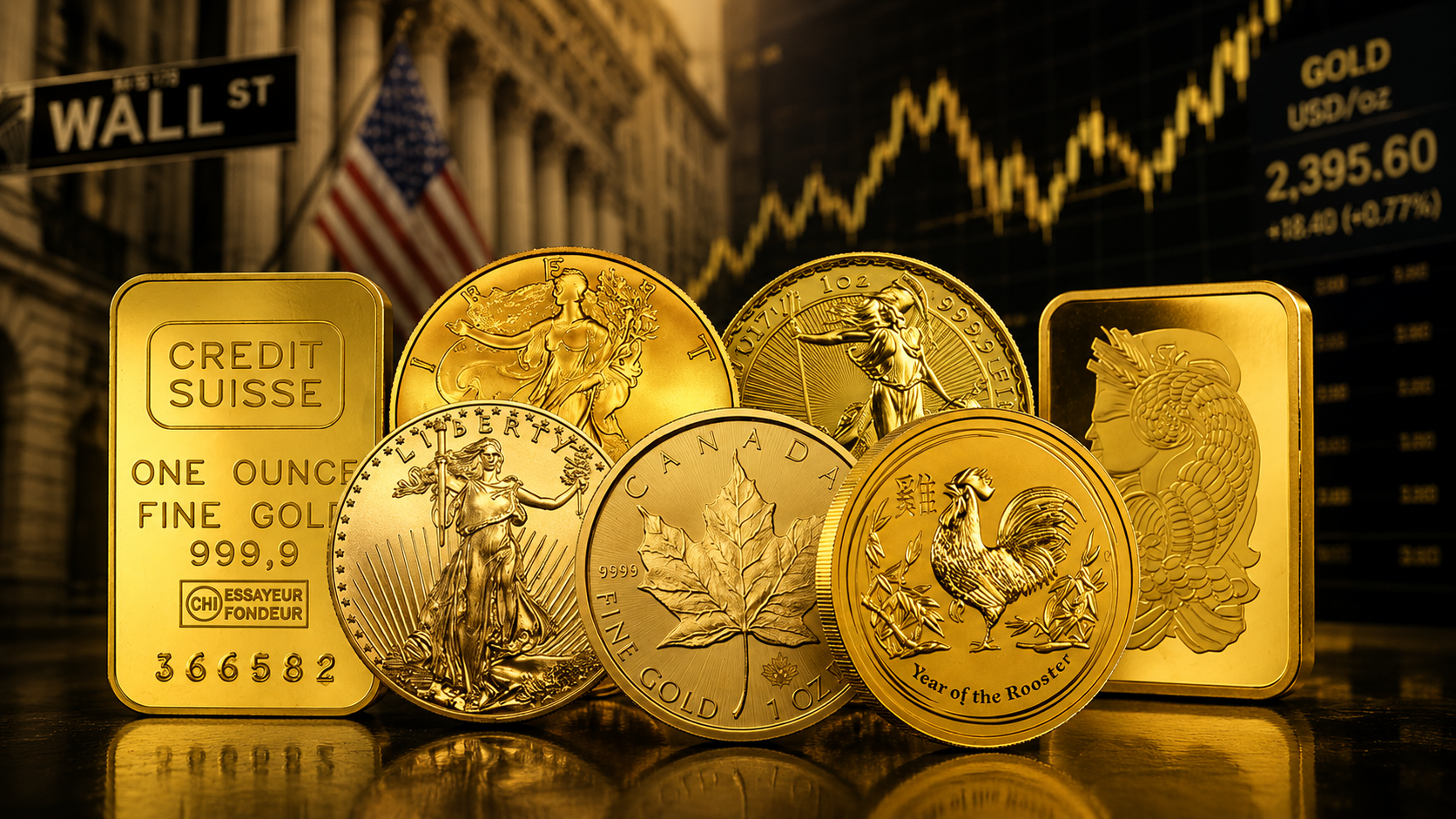
Gold Remains at the Center of the Global Precious Metals Market
Gold continues to command attention from investors, central banks and financial markets around the world. Unlike assets whose value depends on the performance of a company or the creditworthiness of an issuer, physical gold has historically occupied a unique position as a globally recognized store of value.
In 2026, investors are watching a combination of interest rates, inflation expectations, government debt, currency movements, central-bank activity and geopolitical uncertainty to understand what could shape the gold market.
Rather than focusing on any single price prediction, understanding these underlying forces can provide a clearer picture of why gold remains relevant in long-term portfolio discussions.
What Is Driving Gold in 2026?
Gold prices can respond to many different economic forces at the same time.
Among the most important factors investors continue to monitor are monetary policy, real interest rates, inflation expectations, the strength of the U.S. dollar and demand for physical gold.
When investors become concerned about the purchasing power of currencies or uncertainty in financial markets, demand for assets perceived as stores of value can increase.
Gold can also experience periods of volatility, however, and no single economic development guarantees that its price will rise or fall.
That makes the broader economic environment especially important when evaluating the metal.
Central Banks and Global Gold Demand
One of the most closely followed areas of the gold market is central-bank activity.
Gold is held as a reserve asset by central banks around the world. Changes in official-sector buying can therefore represent an important source of demand in the global market.
For investors, the significance extends beyond the amount of gold purchased.
Central-bank demand also demonstrates the continuing role of gold within the international monetary system.
Investors in 2026 will continue watching whether central banks expand, maintain or reduce their gold reserves and how those decisions affect the broader supply-and-demand picture.
Interest Rates, Inflation and the U.S. Dollar
Interest rates remain an important part of the gold equation.
Because physical gold does not pay interest, periods of high real interest rates can make interest-bearing investments relatively more attractive. Conversely, expectations for declining rates can change the opportunity cost associated with holding gold.
Inflation is another major consideration.
Gold is frequently discussed as a potential long-term store of purchasing power, although its price does not move perfectly with inflation over shorter periods.
The U.S. dollar also matters because gold is commonly priced globally in dollars. Currency movements can therefore influence both international demand and the dollar-denominated price of the metal.
Together, these factors make Federal Reserve policy and broader monetary conditions important areas for gold investors to follow.
Government Debt and Fiscal Conditions
Government borrowing and fiscal policy have become increasingly important topics across financial markets.
Large fiscal deficits and growing sovereign debt can influence expectations surrounding inflation, interest rates, currencies and long-term economic stability.
Gold does not eliminate the risks associated with these conditions, but its independence from a corporate balance sheet or individual government’s creditworthiness is one reason some investors include physical precious metals within a broader diversification strategy.
The relationship between debt and gold is not automatic, however. Markets can respond differently depending on economic growth, monetary policy and investor expectations.
Geopolitical Uncertainty
Gold has historically attracted additional attention during periods of geopolitical and financial uncertainty.
Wars, trade disputes, political instability and disruptions to global financial systems can all influence investor behavior.
That does not mean geopolitical events automatically result in higher gold prices. Markets frequently anticipate events before they occur, and reactions can change quickly as new information becomes available.
Still, geopolitical risk remains one of several important factors investors monitor when evaluating demand for gold.
Physical Gold vs. Financial Gold Exposure
Investors can gain exposure to gold in several different ways, but those methods are not identical.
Physical gold coins and bars provide direct ownership of the metal. Other investors may choose exchange-traded products, mining companies or other securities connected to gold.
Each approach carries different considerations involving ownership, liquidity, storage, expenses, market exposure and counterparty risk.
Investors considering physical precious metals should understand exactly what they are purchasing, including the metal’s weight, purity, premium and potential storage requirements.
Gold and Retirement Diversification
Some investors also choose to hold certain qualifying precious metals within a self-directed IRA.
A Precious Metals IRA generally involves an approved custodian and qualified depository, and not every gold coin or bar is eligible.
For investors considering this approach, the purpose should extend beyond simply predicting where gold prices will move next.
The larger question is whether physical precious metals fit appropriately within the investor’s overall retirement objectives, risk tolerance and diversification strategy.
What Investors Are Watching
As 2026 progresses, several developments could influence the direction of gold.
Investors are closely monitoring Federal Reserve policy and interest rates, inflation trends, U.S. dollar strength, central-bank gold purchases, government debt and deficits, geopolitical developments, physical investment demand and global economic growth.
No single factor determines the price of gold. The market reflects the interaction of all of them.
That is why understanding the economic environment can be more useful than relying solely on short-term price forecasts.
The Bottom Line
Gold’s role in the global financial system has evolved over centuries, but the fundamental reasons investors follow it remain recognizable.
It is a scarce physical asset, a central-bank reserve holding and an investment that exists outside the balance sheet of a corporation.
The gold market may experience substantial volatility throughout 2026, and past performance cannot predict future results. Still, monetary policy, central-bank demand, fiscal conditions and geopolitical uncertainty are likely to keep gold at the center of the precious-metals conversation.
For investors considering physical gold, the goal should be to understand both its potential benefits and its risks and determine how, if at all, it fits within a broader diversified strategy.
Limitless Metals provides education and assistance for investors interested in physical gold, silver and Precious Metals IRAs.
Risk Disclosure: Precious metals involve risk and may appreciate, depreciate or remain unchanged. Past performance does not guarantee future results. Limitless Metals does not provide legal, tax or investment advice. Consult appropriate professionals before making financial decisions.